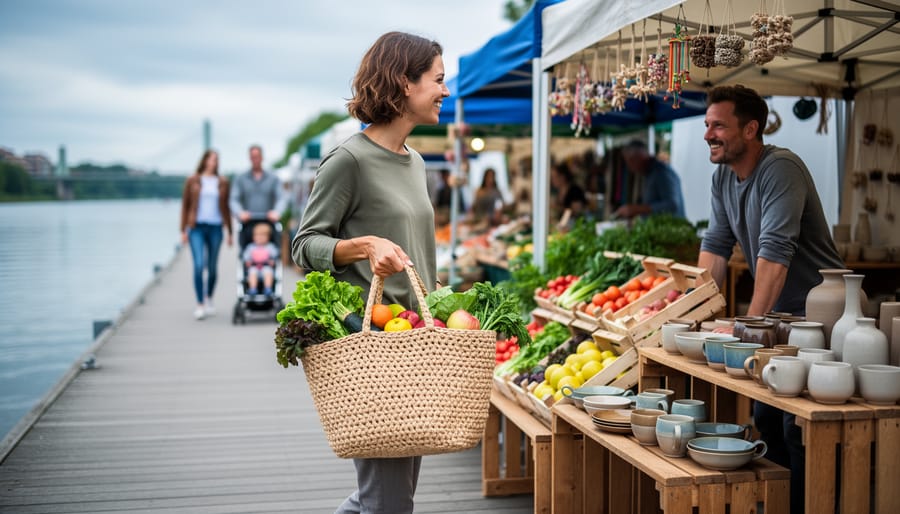
Getting outside at riverside markets transforms a simple shopping trip into an active, engaging experience that combines fresh air, community connection, and movement. Instead of wandering through indoor aisles, you’re walking along waterfront pathways, carrying baskets of seasonal produce, pausing to chat with vendors, and naturally incorporating physical activity into your routine without ever stepping foot in a gym.
Riverside markets offer something conventional outdoor activities often lack: purpose and community. Every step has meaning. You’re not just walking for exercise; you’re discovering heritage crafts from local artisans, sampling fresh-baked goods still warm from the oven, and connecting with the people who grew your vegetables that morning. The riverside setting adds another dimension, with breezes off the water and the gentle sound of flowing currents creating an atmosphere that makes you want to linger, explore, and keep moving.
For families, these markets turn outdoor time into an adventure. Kids can help carry lighter items, count out coins at vendor stalls, and burn energy naturally while parents shop. Take Sarah Chen, who runs a pottery booth along the St. Lawrence corridor. She’s watched generations of families make market visits their Saturday tradition, kids growing from toddlers clutching parents’ hands to teenagers helping set up vendor tents.
The beauty of this approach is its accessibility. No special equipment needed, no memberships required, just your reusable bags and curiosity.
The Natural Connection Between Markets and Movement
Riverside markets transform ordinary shopping into movement by design. Unlike enclosed malls where escalators and corridors funnel visitors in predictable loops, open-air markets spread across waterfront spaces invite genuine exploration. Vendors arrange their stalls along winding pathways that follow the natural contours of riverbanks, creating routes that feel less like shopping aisles and more like outdoor adventures. You pause at one booth, catch the scent of fresh baking from another twenty metres away, and find yourself walking toward it without thinking twice.
This spontaneous walking and physical activity happens naturally when markets embrace their riverside settings. The open sky overhead, breeze off the water, and uneven terrain underfoot engage your body differently than climate-controlled retail spaces ever could. Research shows outdoor environments prompt people to move more and stay longer, which means market visitors often accumulate far more steps during a two-hour browse than they realize.
The community dimension matters just as much as personal wellness. When people gather outdoors, moving between stalls at their own pace, conversations happen differently. You strike up discussions with vendors working in open booths, compare notes with fellow shoppers examining pottery under natural light, and connect with neighbours in ways that indoor environments rarely foster. This combination of physical activity and local community support creates a social fabric stronger than either element alone could achieve.
Markets that understand this connection design their layouts to encourage lingering and wandering rather than efficient transactions. Wide pathways accommodate families with strollers, seating areas near the water invite rest between browsing sessions, and vendor placement creates reasons to explore every corner of the space.
Walking and Wandering: The Heart of Market Exploration
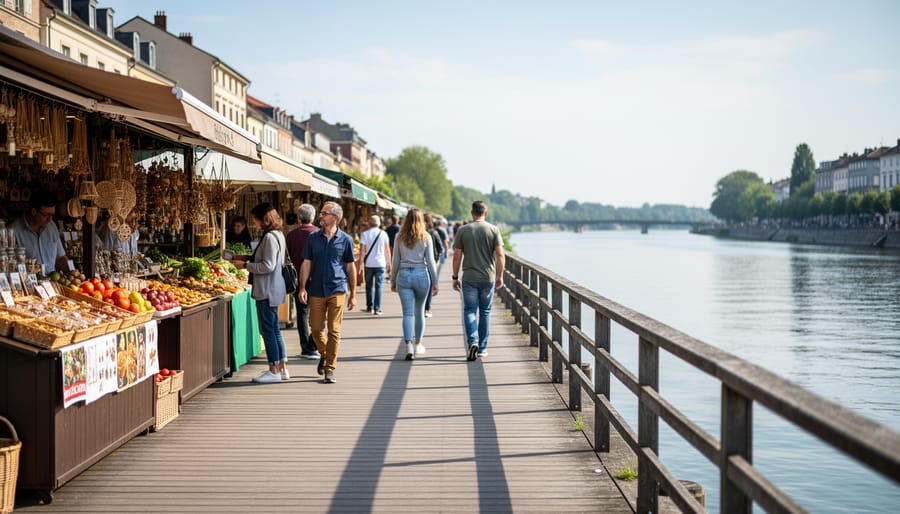
Walking transforms a riverside market visit from a simple shopping errand into a journey of discovery. Unlike the hurried pace of indoor malls or big-box stores, these outdoor spaces invite you to slow down, breathe in the river air, and let curiosity guide your steps. The gravel paths and wooden boardwalks wind between vendor stalls in ways that reward wanderers, turn one corner and you’ll find a potter shaping clay under a canopy, take another and discover a baker pulling fresh sourdough from a mobile wood-fired oven.
The riverside setting makes every step more pleasurable. Cool breezes off the water temper summer heat, while the sound of flowing current creates a natural soundtrack that no indoor venue can replicate. Many markets along the St. Lawrence and Fraser rivers have designed their layouts to encourage meandering, with intentional gaps between vendor clusters that draw visitors toward the water’s edge or into shaded groves where artisans set up smaller, more intimate displays.
At Byward Market in Ottawa, vendors report that customers who arrive intending to buy specific items often spend an extra hour simply walking and exploring, ultimately supporting multiple local businesses they hadn’t planned to visit. This spontaneous discovery is what makes handmade local products so accessible, you stumble upon a leatherworker’s booth tucked beside the dock, watch them tooling a belt, and suddenly you’re having a conversation about their craft that wouldn’t happen in any other retail environment.
The physical act of walking also builds community. You’ll pass the same faces multiple times, exchange knowing smiles with other explorers, and naturally fall into step with neighbours. Market organizers in places like the Forks in Winnipeg have added benches and viewing platforms specifically to give walkers places to pause, rest, and take in both the merchandise and the landscape before continuing their exploration.
Waterfront Activities That Complement Your Market Visit
Before or After: Planning Your Active Day
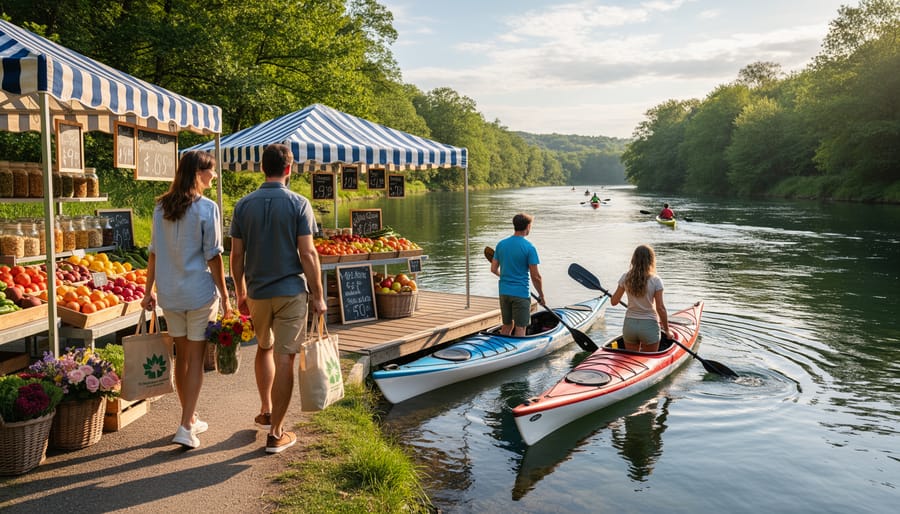
Planning your day around riverside market visits turns a simple outing into something richer. Most Canadian riverside markets open mid-morning and run through early afternoon, which leaves you with two solid options: arrive early for a paddle or bike ride before vendors set up, then shop as the market comes alive, or browse first and save the more demanding activity for after you’ve made your purchases.
Storage matters when you’re juggling tote bags and adventure gear. Many markets offer vendor courtesy, ask stallholders if you can leave your purchases with them while you take a quick waterfront walk. Bring a cooler in your car for perishables if you’re planning hours of activity afterward. Some regular market-goers pack a small backpack for essentials and wear it during lighter activities like trail walks.
If you’re planning water activities, review stand up paddleboard safety guidelines before heading out. Morning paddles work beautifully before markets open, you’ll have calmer water and can arrive at the market refreshed rather than rushing through stalls to reach a rental window.
The rhythm you choose shapes the whole experience. Active first means you shop hungry and appreciate the food vendors more. Market first means you discover what local makers offer, then carry that inspiration into your afternoon on the river.
Seasonal Activity Highlights
Each season brings its own rhythm to riverside markets, and pairing your visit with activities that match the weather makes the experience richer. Summer mornings are perfect for paddling or cycling along the water before browsing vendor stalls, pack a change of clothes and arrive early to beat the heat. Autumn invites slower exploration: the riverside paths lined with changing leaves create ideal conditions for walking tours that extend beyond the market boundaries, and cooler temperatures make longer outdoor stays comfortable.
| Season | Best Activities | What to Bring |
|---|---|---|
| Spring | Walking trails, bird watching, light cycling | Light jacket, reusable bag, binoculars |
| Summer | Paddleboarding, kayaking, swimming | Towel, sunscreen, water bottle, dry bag |
| Autumn | Hiking, photography walks, picnicking | Layered clothing, blanket, camera |
| Winter | Skating, snowshoeing, winter walks | Warm layers, thermos, hand warmers |
Winter transforms riverside markets into hubs for cold-weather activity, where available, skating rinks and groomed paths turn market visits into full outdoor adventures. Time your arrival to catch seasonal celebrations that often include outdoor entertainment, from live music to ice sculpture displays. Spring requires flexibility: waterproof footwear and layers let you adapt to unpredictable weather while enjoying the return of warmer air and longer daylight hours. The key is matching your activity level to the season’s natural offerings rather than fighting against them, letting the river’s changing character guide your outdoor experience.
Family-Friendly Outdoor Experiences at Market Hubs
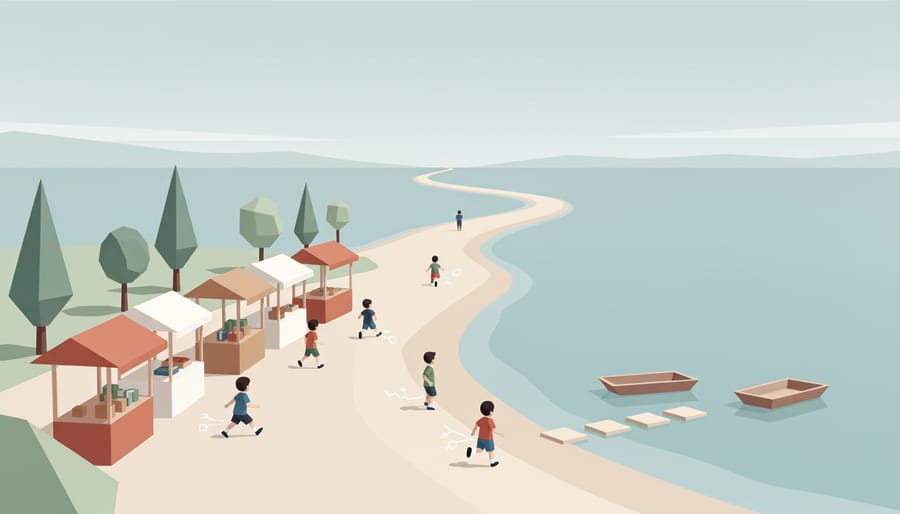
Riverside markets have become natural gathering spots for families precisely because they offer so much more than shopping. Kids can stretch their legs, explore safely, and burn energy while parents browse, a rare combination that makes market visits genuinely enjoyable for everyone.
Many riverside market hubs now incorporate dedicated play spaces right into their layouts. The ByWard Market in Ottawa features small green areas where children can run between vendor visits, while markets along the Saint John River often have grassy waterfront sections perfect for impromptu games. These aren’t fancy playgrounds, they’re simple open spaces that let kids be kids while staying close to the action.
Interactive vendor stations turn shopping into participation. Pottery vendors at Winnipeg’s Forks Market sometimes set up outdoor wheels where children can try their hand at shaping clay. Farm stands frequently invite kids to help sort vegetables or learn about where food comes from. These hands-on moments transform passive tagging-along into genuine engagement.
The riverside setting itself becomes the activity. Short nature walks along adjoining paths offer built-in breaks when market crowds feel overwhelming. Kids can spot ducks, skip stones, or simply watch boats pass, low-key outdoor activities that reset everyone’s mood. Markets in smaller communities like Arnprior lean into this advantage, with vendor stalls opening directly onto river trails.
Smart market organizers understand that keeping children active and happy extends family visit times. When a five-year-old can move freely between a vendor tent, a snack by the water, and a quick run on the grass, parents relax and shop longer. The outdoor element isn’t just pleasant, it’s what makes these spaces genuinely family-friendly rather than simply family-tolerated.
Vendor Spotlight: Businesses That Bring Activity Outside
The vendors and organizers who create activity-rich experiences at riverside markets understand something essential: their stalls are more than selling spaces, they’re stages for community connection. These businesses actively bring people outdoors, transforming passive browsing into engaging, memorable moments that celebrate both movement and culture.
At markets along the St. Lawrence and Ottawa rivers, you’ll find artisan bakers conducting outdoor bread-making workshops where visitors knead dough under pop-up canopies, their hands dusted with flour while river breezes cool their faces. These demonstrations draw crowds who stay standing, shifting from foot to foot, leaning in to watch shaping techniques, then walking away with fresh loaves and new skills. The physical act of gathering, watching, and learning keeps everyone in motion.
Live music vendors create another layer of outdoor activity. Buskers and scheduled performers at markets like those in Fredericton and Kingston don’t just provide background ambiance, they inspire spontaneous dancing, toe-tapping, and the kind of movement that makes children twirl and adults sway without thinking. One folk duo at a New Brunswick market sets up near the waterfront specifically so their music carries across open spaces, inviting passersby to stop, listen, and often join impromptu sing-alongs.
We noticed people stayed longer and talked more when we moved our demonstrations outside, the fresh air and movement changed the whole energy of our market presence.
Wellness-focused vendors bring yoga mats, resistance bands, and stretch sessions directly to market grounds. A Manitoba market hosts sunrise yoga every Saturday morning before stalls officially open, allowing participants to flow through poses as the river reflects early light, then transition seamlessly into browsing with endorphins already flowing.
Woodworkers, potters, and textile artists who set up outdoor studios offer the most immersive experiences. Watching a carver’s hands shape cedar or a weaver’s shuttle fly back and forth keeps spectators engaged physically, they circle the workspace, crouch to see details, ask questions that require pointing and gesturing. These vendors create pockets of active observation throughout market spaces, proof that outdoor engagement flourishes when businesses intentionally design for it.
Making Every Visit an Active Adventure
Treat your next market visit as more than a shopping trip, it’s a chance to move, explore, and connect with the outdoor spaces around you. Start by choosing active transportation when possible. Cycling to the market lets you enjoy riverside paths and arrive energized, plus many markets now offer bike racks near vendor areas. If driving is necessary, park a bit farther out and walk the final stretch along the water.
Before you go, sketch a loose walking route through the stalls rather than rushing vendor to vendor. Notice which sections you want to linger in, where local artisans are demonstrating their crafts outdoors, and where you might pause for a coffee by the river. Pack a small daypack with water, sunscreen, and a reusable bag, gear that keeps you comfortable for extended time outside without weighing you down.
Plan for what comes after, too. Toss a picnic blanket in your car or bring shoes suitable for a waterfront trail if you’re tempted to extend your adventure. The slower pace of outdoor exploration means you’ll chat with vendors longer, discover corners of the market you’d otherwise miss, and build real connections with the people behind the products.
These practical riverside market tips turn a quick errand into an active morning that nourishes both body and community ties, reminding us why outdoor markets remain gathering places worth returning to.
Your next riverside market visit holds more than just the promise of fresh produce or handcrafted treasures. When you step outside and let the river air guide your journey through vendor stalls, you transform a simple shopping trip into something richer. The walk becomes meditation. The pause by the water becomes connection. The laughter of children chasing each other between tents becomes the soundtrack of community.
Markets along Canada’s rivers thrive because they invite us to slow down, breathe deeply, and move at a human pace. Every vendor who sets up outdoors contributes to this experience, creating spaces where commerce and nature meet on equal ground. Whether you paddle to the market, cycle along the shore, or simply wander longer than you planned, you’re participating in something quietly radical: choosing presence over speed, fresh air over convenience.
The activity itself matters less than the intention. Bring your curiosity. Bring your willingness to explore. The riverside and its market makers will take care of the rest, offering you not just goods to take home, but memories shaped by movement and shared outdoor spaces.