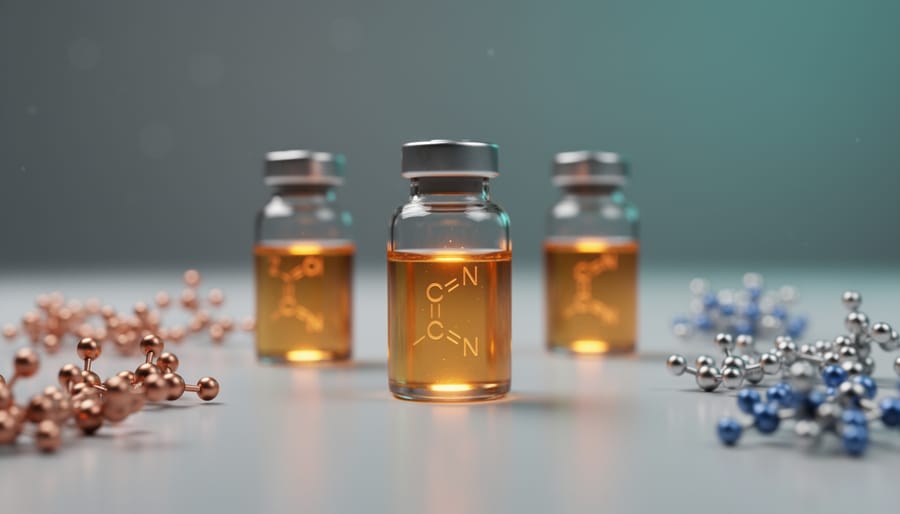
The GLOW Stack is a research-compound combination that pairs three peptides: GHK-Cu, BPC-157, and TB-500. Each one is studied on its own, and the “stack” is simply the idea of looking at them together as a single set. You’ll see the GLOW stack (GHK-Cu + BPC-157 + TB-500) described this way in research-focused catalogs, usually as a bundle offered for laboratory study rather than a consumer product.
Why does it matter to our corner of the market? Because curiosity about wellness runs deep among the folks who wander our riverside stalls, from the soap maker who talks botanicals all morning to the neighbour chasing the next thing in self-care. Questions about the GLOW Stack come up, and they deserve plain answers.
So here’s what we’ll cover: what the stack actually contains, how researchers examine the three compounds together, where people tend to run into the term, and what the evidence honestly does and doesn’t say. No hype, no jargon, just a clear starting point you can bring to your own conversations, and to your own healthcare provider.
What the GLOW Stack Means in Plain Terms
If you’ve spent any time in online wellness communities, you may have seen the phrase “GLOW Stack” pop up and wondered what everyone’s talking about. Here’s the simple version: it’s a nickname for a combination of four peptide-style compounds that people discuss together. A peptide is just a short chain of amino acids, the same basic building blocks found in the proteins all around us.
The word “stack” is the part that trips people up. It simply means several things taken or used together, rather than one at a time. Think of a market table where a handful of different vendors set up side by side. Each brings something of their own, and shoppers tend to talk about the whole row at once. That’s roughly how the GLOW Stack gets talked about.
The term itself grew out of online wellness forums and social media, where people trade ideas and curiosity spreads quickly. It’s popular because the name is catchy, the combination sounds tidy, and folks are naturally interested in skin, tissue, and self-care topics.
It’s worth saying clearly that this is an informational overview. Research on this particular combination is still limited, and much of what’s out there looks at the individual ingredients rather than the group. Nothing here is medical advice. If you’re curious about whether something like this could fit your own situation, a qualified health professional is the right person to talk with before making any decisions.
The Four Pieces of the Puzzle: What Goes Into the Combination

Where Each Component Comes From and What It Is Studied For
The GLOW Stack is usually described as four peptide-style ingredients, and each one has its own story. Think of walking a riverside market where every stall has a different specialty. Here’s a quick look at what each ingredient is and what researchers have explored.
- GHK-Cu
- A small copper-binding peptide that occurs naturally in human blood and tissue. Laboratory and some skin-focused studies have explored its role in tissue repair and skin renewal.
- BPC-157
- A fragment of a protein found in the stomach, created in laboratories. Most of the research involves animal models looking at tissue healing, with very little human data.
- TB-500
- A synthetic version of part of thymosin beta-4, a protein the body makes naturally. It has been studied mainly in lab and animal settings for its role in cell movement and tissue repair.
- KPV
- A short piece of a larger hormone fragment, made up of just three amino acids. Researchers have looked at it in cell and animal studies related to inflammation and skin and gut tissue.
A few patterns show up across the list. Two of these ingredients, GHK-Cu and thymosin beta-4 (the protein behind TB-500), come from naturally occurring substances, while BPC-157 and KPV are lab-made fragments inspired by larger molecules. Naming where an ingredient comes from helps explain why the research looks the way it does.
The type of evidence also varies. GHK-Cu has the longest research history, including some studies on skin. The others lean heavily on cell cultures and animal studies, which are useful for generating ideas but don’t tell us how something behaves in people.
That’s the honest picture so far: interesting background, with plenty still being explored. Anyone curious about a specific ingredient is wise to check with a qualified health professional before drawing conclusions.
Why They Get Grouped Together
Think of a market lane where one stall sells honey, the next sells beeswax balm, and a third sells dried herbs. Each is good on its own, but shoppers often pick up a little from all three because they seem to suit each other. That’s much the same reasoning behind grouping these four ingredients.
Enthusiasts tend to describe each piece as playing a different role. One is talked about in connection with skin, another with tissue repair, and others with cellular processes or general upkeep. The idea is that covering several angles at once might do more than any single ingredient could. It’s a tidy story, and it’s easy to see why it appeals.
But a theory about how a combination might work is not the same as evidence that it does. Plenty of ideas sound sensible on paper and then behave differently in real bodies. That gap matters here, because most of the research focuses on the ingredients individually, often in lab or animal settings.
Studies looking at the full combination together are much more limited. So the grouping is better understood as a popular idea shared in wellness communities than as a proven partnership. Anyone curious about it should check in with a qualified health professional first.
How Researchers Look at the Combination: What the Evidence Shows
When people ask what the research says about the GLOW Stack, the honest answer starts with a question: which kind of research? Evidence comes in layers, and each layer tells us something different.
- Lab studies (cells in a dish): show how a compound behaves in a controlled setting, but can’t show what happens in a living body.
- Animal studies: reveal how a compound acts in a whole organism, but can’t promise the same result in people.
- Small human studies: offer the closest look at real effects, but small groups and short timelines limit how far the findings can be stretched.
- Anecdotal reports: capture personal experiences worth noting, but can’t separate a real effect from coincidence or expectation.
That last point about animals deserves a closer look. A mouse and a person differ in metabolism, skin, and dosing, which is why scientists discuss the limitations of animal models so openly. A promising animal result is a reason to keep asking questions, not a conclusion.
There’s another wrinkle. Most of the research that exists looks at single compounds on their own. Studying a blend is a different job, because ingredients can interact in ways nobody sees when each is tested alone. So findings about one piece of the combination don’t automatically describe the whole stack.
Regulatory status and quality control matter here too. Products sold under this name can vary in what they contain and how consistently they’re made, and that makes results harder to compare from one source to the next. Careful language helps. “Studied for” is not the same as “shown to,” and a good explainer, like a good vendor at a market stall, tells you plainly which one applies.
Where You Will Hear About the GLOW Stack and How People Talk About It
You’ll most likely run into the term GLOW Stack online first. Wellness forums, social media threads, and beauty and self-care chats are where the phrase gets passed around, often with a lot of enthusiasm and not much context. It can also come up in friendly conversation, even at a market stall while you’re sniffing a bar of lavender soap and chatting with the maker.
A little healthy curiosity goes a long way here. Marketing language tends to sound confident and certain, while research findings are usually more careful, full of phrases like “early evidence” or “more studies are needed.” When something sounds like a promise, it’s worth pausing to ask where the information comes from. Who ran the study? Was it done in a lab, on animals, or with people? Is the source selling something?
The same habit works beautifully at a market. Asking a vendor where their ingredients come from, how they’re made, and what’s actually in the jar is a normal, welcome part of shopping along the river. Good makers love those questions, and the answers tell you a lot.
Vendor spotlight: many of the artisans you’ll meet at riverside stalls take a refreshingly simple approach. Their balms, creams, and soaps often feature short ingredient lists built around plant-based, traceable ingredients like beeswax, shea butter, or calendula grown nearby. It’s a different path from the lab-focused world of the GLOW Stack, and neither one is wrong. If you enjoy knowing exactly what’s in your self-care routine, our guide to why handmade local goods matter more than you might think is a lovely place to continue.
Common Questions About the GLOW Stack
Readers tend to arrive with the same handful of questions, so here are short, plain answers to the ones that come up most.
What does the term “GLOW Stack” mean?
It’s online shorthand for a group of four peptide-style compounds discussed together in wellness circles. “Stack” simply means several things used together, and the name itself comes from community conversation rather than any official definition.
Is it the same as a skincare routine?
Not really. A skincare routine is the everyday steps people follow, like cleansing and moisturizing, while the GLOW Stack refers to a specific combination of compounds that people talk about in a different context.
How strong is the research behind it?
Research on the individual components exists, mostly in lab and animal settings, but studies on the full combination in people are limited. That’s why it’s best to treat the topic as something to read about, not a proven result.
Where can I find reliable information?
Look to peer-reviewed research, regulatory agency websites, and a qualified health professional rather than forum posts or sales pages. Asking questions about sourcing and ingredients is always a good habit, too.
Curiosity is welcome here, and a good question is often the first step toward a better-informed choice. Keep asking, keep reading, and lean on trusted professionals whenever a topic touches your health.
So, what is the GLOW Stack? It’s a popular shorthand for a combination of four peptide-style compounds that people talk about in wellness circles, usually in the context of skin and general wellbeing. We’ve looked at what goes into it, why the pieces get grouped together, and what researchers have actually studied. The honest picture is that individual components have some lab and animal research behind them, while evidence on the full combination in people remains limited.
Curiosity about topics like this is always welcome. Just pair it with good information and a conversation with a qualified health professional before you make any decisions for yourself.
And if all this has you thinking about simpler, more familiar self-care, take a stroll through the vendors on Markets By The River. You’ll find handmade skincare, local honey, and natural wellness goods from makers who are happy to tell you exactly what’s in their jars.